The frontier AI ecosystem is moving at a breakneck speed, and today promises to deliver one of the most critical model drops of the quarter.
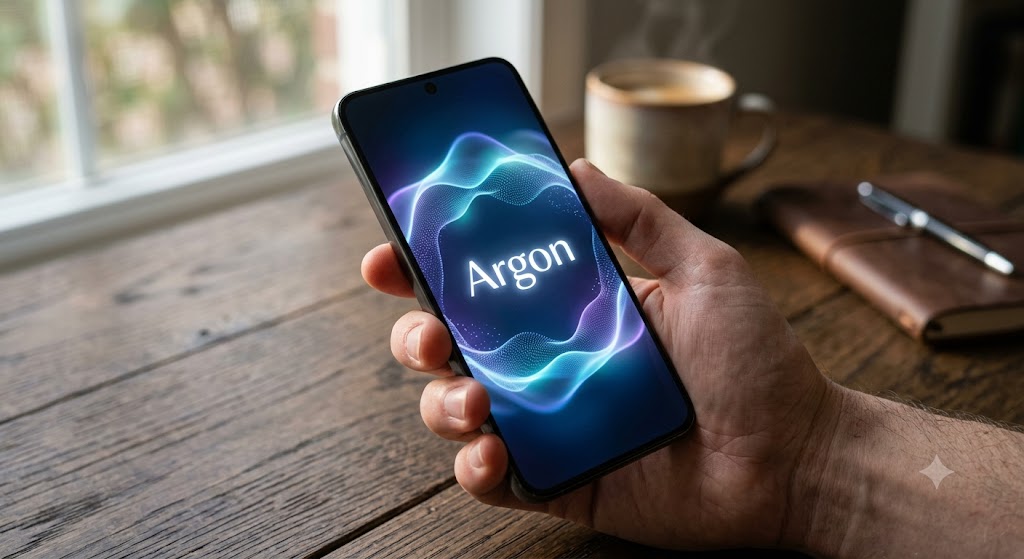
While Anthropic temporarily grabbed headline attention yesterday with the unexpected rollout of Haiku 5.5, background activity across Google’s developer pipeline suggests an immediate response. Google Gemini 4 Argon appears on the brink of an official launch today, driven by persistent sightings across backend systems, cloud console endpoints, and developer API builds.
With model identifiers leaking across select Google Cloud Vertex AI infrastructure regions, full deployment feels imminent. Here is an updated, comprehensive analysis of Gemini 4 Argon’s pricing structure, technical specifications, benchmark gains, grey-market feature testing, and Google’s broader strategy for model deprecation.
The Launch Window: Why Today Is the Target
The race for frontier model dominance has intensified across reasoning, coding efficiency, and long-context capabilities. Anthropic’s sudden launch of Haiku 5.5 set a fresh bar for low-latency lightweight models, but Google DeepMind’s response targets an entirely different performance class. Argon is engineered for frontier-level multi-step reasoning, autonomous execution, and massive output handling.
[Industry Timeline]
├── Yesterday: Anthropic launches Haiku 5.5
├── Today (Targeted): Gemini 4 Argon expanded API & Cloud rollout
└── Upcoming: Model deprecation of legacy Flash/Fast endpoints & Neon Flow expansion
Developers tracking early endpoint deployments note that Gemini 4 Argon gray testing features have been quietly appearing for select accounts, signaling that final rollout preparation is complete.
Complete Pricing & Token Structure
Google is introducing Argon with an aggressive, multi-tier pricing strategy meant to balance high-volume corporate workloads with lower-cost development testing.
| Tier / Call Type | Input Rate (per 1M tokens) | Output Rate (per 1M tokens) |
| Global Standard | $4.00 | $20.00 |
| Flex / Batch Processing | $2.00 | $10.00 |
| Cached Input (Global) | $0.20 | — |
| Cached Input (Flex/Batch) | $0.10 | — |
The introductory $2.00 input / $10.00 output rate for Flex and Batch processing offers developers an affordable entry point to test high-token workloads. Meanwhile, prompt caching discounts reaching up to 95% ($0.10/1M cached tokens) make continuous, context-heavy agentic workflows commercially viable for large-scale enterprise integration.
Benchmarks & Technical Breakthroughs: The 1M Output Horizon
One of Argon’s standout features is its massive expansion in context generation. Early leak data surrounding Gemini 4 Argon’s 1M output token benchmark capabilities indicates a generational shift in how model outputs are structured.
┌─────────────────────────────────────────────────────────┐
│              GEMINI 4 ARGON CORE DOMAINS                │
├───────────────────────────┬─────────────────────────────┤
│ Software Engineering      │ Knowledge Work              │
│ - 1M Output Capacity      │ - Legal & Financial Analysis│
│ - DeepSWE v1.1 Leaders    │ - Multi-step Automation     │
├───────────────────────────┼─────────────────────────────┤
│ Cybersecurity Defense     │ Creative Writing            │
│ - Fairwind Vetting        │ - Sustained Trajectory      │
│ - Patching Autonomy       │ - Complex Narrative Control │
└───────────────────────────┴─────────────────────────────┘
Key Breakthrough Areas:
Unprecedented 1 Million Token Output Capacity: Departing from legacy limits (such as older 64K or 128K generation caps), Argon allows autonomous systems to build full multi-file codebases, generate complete legal briefs, and compose book-length narrative assets in a single, continuous API pass.
Frontier Coding & Software Benchmarks: Demonstrating industry-leading performance on benchmarks like DeepSWE v1.1, Argon focuses on long-horizon, repository-wide software engineering and complex refactoring tasks.
Autonomous Cybersecurity Defenses: Vetted through early security evaluation initiatives such as the Fairwind Program, the model is built to write real-time vulnerability patches, automate threat detection, and analyze software defense frameworks.
Advanced Knowledge & Creative Execution: Argon maintains structural cohesion across lengthy financial models, scientific research synthesis, and creative writing prompts without experiencing logic drift midway through generation.
Ecosystem Impact: Model Deprecations on the Horizon
The rollout of Argon also marks a major transition phase for Google’s model architecture. As next-generation models take center stage, Google is preparing to streamline its lineup.
Reports regarding Google model deprecations across 3.6/3.7 Flash and Fast modes indicate that legacy models will be gradually retired to make room for Gemini 4 variants. Developers working on older endpoints should expect migration pathways and sunset timelines to be published alongside today’s release announcements.
Structured Rollout Phasing
When Google officializes the launch today, deployment will follow a prioritized rollout matrix to optimize server capacity and performance stability:
Cybersecurity & Internal Staging: Initial access validated through Fairwind Program partners and core DeepMind teams.
Paid API & Google AI Ultra: Rolling out immediately to paying Cloud Vertex AI, Google AI Studio developers, and Google AI Ultra subscribers.
Enterprise & General Developers: Broad availability expanding across Google Workspace enterprise controls and standard API tiers.
Consumer Tier & Neon Flow: Consumer-facing interfaces, Gemini 4F, and Neon Flow integration will follow as initial server loads settle.
Looking Ahead: Gemini 4F and Neon Flow
Beyond Argon, developer attention remains focused on incoming siblings like Gemini 4F and Neon Flow. While Argon anchors the heavy reasoning and high-token capacity demands, lighter variants will serve latency-critical, everyday applications.
Keep your developer dashboards open—with model footprints active in Google Cloud, today is shaping up to be a defining release day for the Gemini 4 ecosystem.