
When Google announced Gemini 4 Argon on September 30, it immediately sent ripples across the tech industry. Positioned as a massive leap forward in long-horizon reasoning and complex software engineering, the model was initially locked behind a strict rollout wall. Access was gated exclusively to select cyber defenders under Google’s Fairwind Program and internal DeepMind teams.
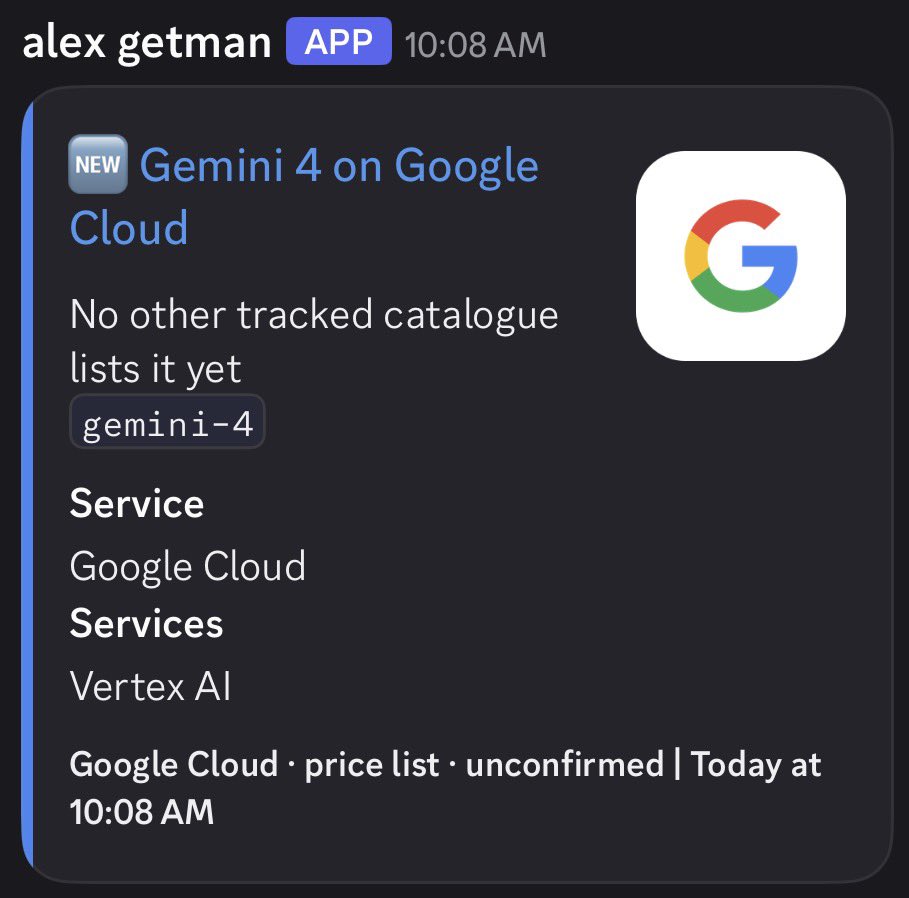
However, recent activity on Google Cloud Vertex AI signals that the wait is nearly over. References and backend integrations for Gemini 4 Argon have officially surfaced within Google Cloud infrastructure. When a new frontier model hits Google Cloud staging, history tells us that broad API availability and developer rollouts follow very quickly.
Here is what you need to know about Gemini 4 Argon’s impending arrival, its underlying capabilities, and why its presence on Google Cloud is such a major milestone.
What Makes Gemini 4 Argon Such a Huge Deal?
Unlike standard incremental updates, Gemini 4 Argon introduces a fundamental structural shift in what artificial intelligence can deliver in a single response pass.
1. The 1 Million Token Output Capability
While previous models excelled at processing vast input context windows, they were restricted by conservative generation boundaries (often topping out at 64,000 output tokens). Gemini 4 Argon shatters this bottleneck by pushing continuous output generation up to 1 million tokens.
To dive deeper into the performance metrics and architecture behind this breakthrough, check out our comprehensive coverage on the Google Gemini 4 Argon launch, 1M output token capability, and benchmarks.
This massive output window allows the model to write entire multi-file software projects, refactor complete enterprise codebases, and draft exhaustive technical documentation in one unbroken completion pass.
2. Autonomous Long-Horizon Workflows & Grey-Box Testing
Argon is engineered specifically for deep multi-step logic and autonomous agentic workflows. In early real-world deployment tests, cybersecurity firm Wiz utilized Argon to map attack surfaces and successfully discover a previously unknown critical vulnerability in global healthcare software.
For a closer look at early evaluation phases and timeline expectations, read our report on the Gemini 4 Argon release date and grey-testing features.
3. Industry-Leading Benchmark Performance
Google DeepMind benchmarks show Argon outperforming competitor frontier models across key multi-file engineering and complex reasoning tasks. It holds a top-tier standing on long-context retrieval and code synthesis, establishing itself as Google’s most capable model to date.
Shifting Google’s Ecosystem: Deprecations and Fast Modes
The impending arrival of Gemini 4 Argon isn’t happening in a vacuum—it is part of a broader consolidation across Google’s developer stack. As next-generation architectures like Argon step into the spotlight, older model iterations are being phased out to streamline infrastructure and steer workload demand toward highly efficient, specialized endpoints.
To understand how this release impacts legacy APIs and current developer setups, see our breaking breakdown on Google Gemini model deprecations across 3.6, 3.7 Flash, fast mode, and Gemini 4 Argon transitions.
As Google retires older developer endpoints, Argon and its upcoming sub-variants are expected to serve as the new default foundation for complex agentic tasks on Vertex AI.
Why Google Cloud Integration Means Release is Very Close
Google’s deployment pattern for frontier models usually follows a rigid three-stage sequence:
Gated Specialist Testing: Initial rollout to restricted research groups (e.g., Fairwind Program).
Cloud Staging: Uploading model artifacts, billing tiers, and endpoint schemas to Google Cloud Vertex AI infrastructure.
General Cloud & Developer Access: Opening API access to enterprise subscribers, Google AI Ultra tiers, and public developers.
With Gemini 4 Argon now showing up in Google Cloud’s enterprise environment, Stage 2 is officially active. Developers can expect general API access via Vertex AI and Google AI Studio to go live in the coming days, followed shortly by consumer availability for AI Ultra subscribers.
Pricing & API Expectations
Google has already published introductory API pricing structures for Argon once it unlocks on Vertex AI:
| Metric | Introductory Rate | Standard Rate |
| Input Tokens | $2.00 / 1M tokens | $4.00 / 1M tokens |
| Output Tokens | $10.00 / 1M tokens | $20.00 / 1M tokens |
| Prompt Caching | 95% discount on cached inputs | 95% discount on cached inputs |
With standard prompt caching discounts applied, running massive automated coding pipelines will be remarkably cost-effective for enterprise teams transitioning to Argon’s 1M output window.
Summary
The addition of Gemini 4 Argon to Google Cloud is the clearest indicator yet that Google is ready to roll out its most ambitious model to the public. Whether you are a software developer looking to automate multi-file projects or an enterprise looking for autonomous problem-solving capabilities, keep your Google Cloud console open—the official release switch is about to be flipped.