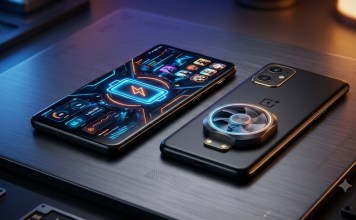

Google is taking a massive leap toward a cloud-free future for mobile intelligence. At the Google I/O Connect India 2026 event, the tech giant officially unveiled a groundbreaking shift in edge computing: executing highly advanced artificial intelligence entirely on-device, completely bypassing remote cloud servers.
By pairing its custom Google Tensor SoC and a specialized Tensor Processing Unit (TPU), Google is transforming the upcoming Pixel 10 family into self-contained AI powerhouses built around absolute privacy and zero-latency performance.
This milestone mirrors the sweeping “agentic AI” vision Google laid out earlier this year, a concept detailed in comprehensive coverage of the major Google I/O 2026 announcements by NokiaPowerUser.
The Pixel 10 Ultimate Privacy Play: 100% Local Processing
At the center of this announcement is the Pixel 10 lineup. While the mobile industry has historically relied on resource-heavy cloud infrastructure to handle smart tasks, Google’s latest architecture moves the heavy lifting to the silicon in your pocket.
Processing data natively on the Tensor TPU yields four major upgrades for the end user:
Ironclad Privacy: Sensitive personal data and user queries never leave the phone.
Near-Zero Latency: Eliminating the round-trip journey to a server means dramatically faster AI response times.
True Offline Utility: AI features continue to function seamlessly without a cellular or Wi-Fi connection.
Enhanced Power Efficiency: Lightweight local execution reduces the battery drain typically caused by continuous cloud data transmission.
Enter Gemma 4 E2B: Built Explicitly for the Tensor TPU
The foundational catalyst for this shift is Gemma 4 E2B for TPU, a highly optimized, open-source small language model (SLM) engineered specifically to extract maximum performance from the Pixel 10’s Tensor hardware.
Despite its lightweight footprint, Gemma 4 E2B enables robust, multi-modal capabilities completely offline:
Deep AI Chat: Complex, conversational interactions without an internet connection (even at 30,000 feet).
Ask Image (Visual Reasoning): The ability to snap a photo and have the AI identify physical objects, plants, or machinery components with 0% cloud reliance.
Ask Audio: On-device, 100% private audio transcription and lecture summarization.
Real-World Edge Cases: Fulfilling the “Agentic AI” Promise
Google backed up its hardware announcements with functional demonstrations, showing how specialized offline agents handle complex everyday tasks by combining reasoning with Mobile Actions (controlling phone features like Wi-Fi or maps via local voice commands):
Offline Travel Assistant: Generate custom itineraries and navigate local recommendations completely grid-free.
Hyper-Local Retail Integration: Convert recipe ideas into precise, localized, in-store shopping maps without pulling data from the web.
Automobile Visual Diagnostics: Mechanics can use the device to take a photo of a faulty vehicle part and receive on-the-spot repair diagnostics instantly, maintaining local shop privacy.
Local Smart Home Automation: Handle local smart home routines directly on the device, significantly improving command execution speed and security.
Unleashing Developers with the Tensor SDK Beta
To accelerate the ecosystem, Google launched the Tensor SDK Beta, providing developers with the framework required to build next-generation, privacy-first Android applications.
The developer toolkit streamlines edge-AI deployments by offering a unified workflow, support for LiteRT (formerly TensorFlow Lite), open-source Edge TPU sample code, and immediate access to over 100 precompiled classical machine learning and SLM models.
Supported Devices
The next-generation on-device AI ecosystem will run natively on the upcoming Tensor-powered Google hardware fleet:
Pixel 10
Pixel 10 Pro
Pixel 10 Pro XL
Pixel 10 Pro Fold
Why This Shifts the Smartphone Paradigm
For years, “AI smartphones” were largely portals to massive, centralized datacenters. By successfully running a multimodal model like Gemma 4 natively on Tensor silicon, Google is effectively rewriting the rules of the mobile experience. As the Android ecosystem leans heavily into this private, local paradigm, Google is setting a high bar for what a truly secure, context-aware digital assistant should look like.