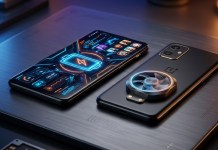

The smartphone UI concept wise has remained static for over a decade. We have been interacting with grid-based icon screens and siloed applications. Samsung, however, appears to be preparing a seismic shift. Recent leaks point toward a revolutionary interaction concept they are exploring: the Fluid AI Design System.
This isn’t just a skin update. It’s a fundamental reimagining of what a mobile interface can be. This concept, potentially destined to define One UI 10 or a future landmark release, is a generative design philosophy built entirely around artificial intelligence.
Let’s dive into what this means and how it could reshape the Samsung Galaxy experience.
Redefining the Interface: From Static to Generative
For generations, One UI (and its predecessor, TouchWiz) has focused on refinement. Each update brought smoother animations, better icons, and new features. The core structure, however, remained predictable: a home screen, an app drawer, and notification shade.
Fluid AI Design System rips up this blueprint. Instead of a pre-determined, static layout, Fluid AI dynamically generates the most suitable user interface based on three critical factors:
Current Task: What are you trying to do right now?
Surroundings: Where are you? (Home, office, car, gym)
Context: What other information is relevant? (Time, upcoming events, recently received messages)
Instead of you adapting to the structure of an operating system, the system reshapes itself around your immediate needs. This is the difference between a tool and an assistant.
The Death of the App-Centric Experience
The most profound impact of Fluid AI would be the end of the app-centric interface. Today, if you need to coordinate a dinner plan, you jump between Calendar (to check availability), Maps (to find a restaurant), Messages (to discuss options), and perhaps a Weather app. It’s a disjointed, manual process.
Samsung’s conceptual design intelligently merges these functions into a single, adaptive experience.
The system will proactively pull the relevant content—your schedule, your location data, and context from a text message thread—and synthesize them. A dynamic interface generates that brings this information together instantly, allowing you to complete complex tasks without ever tapping a distinct app icon.
A New Direction for One UI: AI First, Task Second
If this philosophy transitions from a concept into a future product like One UI 10, it marks a historic pivot for Samsung. For years, the competition has centered on hardware specifications and incremental software speed. This concept shifts the battleground entirely to usability and predictive AI integration.
One UI would evolve from being a stable, customizable launcher of applications into a powerful, anticipatory AI environment. The core user interaction would no longer be “tap and open” but rather “context and generate.” This could well define the defining trajectory for Samsung’s future software development, making the ecosystem feel significantly more cohesive and intuitive than its competitors.
The leaks, which focus on this “generative UI,” strongly suggest this is a foundational pillar for the next generation of One UI.
Vision 1: Generative “Aesthetic and Flow”
The first glimpses of this design language are radically different from anything seen on a modern One UI build. The aesthetic focuses on “soft lighting” and extremely fluid, translucent panels.
A key leak (seen below) showcases a “generative UI panel” (specifically titled “Fluid AI Design System” on screen). This display uses soft, blended gradient lighting—an orange glow—against a dark background. It doesn’t look like an app window; it looks like integrated ambient data.
The Generative UI Panel Ieaked image:

In the image the display generated is a futuristic calendar and agenda view. A central, translucent bubble, with an almost liquid shimmer, clearly displays “Aug 23, 2025″ and highlights “23.” An AI agent, represented by a simple geometric symbol, is “moving beyond static screens” to co-create a “dynamic, flow-based experience.” The text explicitly defines the vision: a merging of AI agents and Generative UI into a single experience.
This visual concept shows how One UI 10 could prioritize presenting contextual information (date, upcoming schedule) dynamically, without forcing the user to open a separate Calendar application.
Vision 2: Task-Centric Hub
The second major vision for Fluid AI is its application across multiple surfaces and its ability to synthesize multiple data streams.
The interface shown below moves past standard window tiling and instead features modular, soft-edged panels that merge and adapt.

Multicontextual Synthesis
The image displays multiple interactions across different device contexts. We see:
A dynamic, soft-glow message panel (from “Emily Olson”).
A combined media playback and contextual data module (showing time, temperature, and current track).
A generated visualization illustrating how data (represented by an ‘hourglass’ shape) flows and merges between services.
Most crucially, we see a smart display on a TV (using the same soft glow and visual language), suggesting how Fluid AI will unify the smart home experience. A connected panel from the TV explicitly says, “Don’t forget your umbrella,” synthesizing weather data and household context.
This synthesized view is the task-centric hub the concept promises. It isn’t a collection of open apps; it’s a unified field of relevant information generated specifically for the user in that moment.
What we think
The Fluid AI Design System concept represents one of the most exciting potential directions for Samsung software in years. It moves the conversation beyond “will One UI 9 have better animations?” to “will One UI 10 completely rethink how we use computers?“
While this is still in the conceptual phase, the level of visual definition in the leaks (using specific dates like 2025 in the examples) indicates Samsung is actively building towards this future. If they can successfully execute this vision, the future of One UI will be fluid, dynamic, and profoundly AI-centric.