Smartphone silicon rivalries are notoriously heated, but this week, things got literal. Reports surfaced out of South Korea claiming that Qualcomm’s next flagship processor was running far too hot in pre-release testing for Samsung’s upcoming flagship device.
The allegations claimed that internal thermal thresholds had been shattered, performance throttling was severe, and Samsung had handed down a strict deadline for a hardware or firmware fix.
Naturally, the tech world went into overdrive. Was Qualcomm facing a repeat of past thermal throttling headaches? Could Samsung pivot entirely back to its in-house Exynos chipset for its next top-tier flagship?
Qualcomm didn’t let those rumors brew for long.
  +-------------------------------------------------------------------------+
  |                             THE CORE RUMOR                              |
  |  Korean reports claim next-gen Snapdragon exceeds thermal limits during  |
  |  Samsung internal testing, prompting a firm deadline for a fix.         |
  +-------------------------------------------------------------------------+
                                     |
                                     v
  +-------------------------------------------------------------------------+
  |                          QUALCOMM'S REBUTTAL                            |
  |  CMO Don McGuire calls claims "100% NOT accurate" on X, stating there   |
  |  are no systemic thermal issues with Snapdragon 8 Elite Gen 6.           |
  +-------------------------------------------------------------------------+
                                     |
                                     v
  +-------------------------------------------------------------------------+
  |                           THE LINGERING CATCH                           |
  |  McGuire's post addressed the standard Gen 6, leaving the higher-clocked |
  |  "Extreme" variant—and the Galaxy S27 Ultra's fate—open to debate.       |
  +-------------------------------------------------------------------------+
Qualcomm Chief Marketing Officer Calls Claims “100% NOT Accurate”
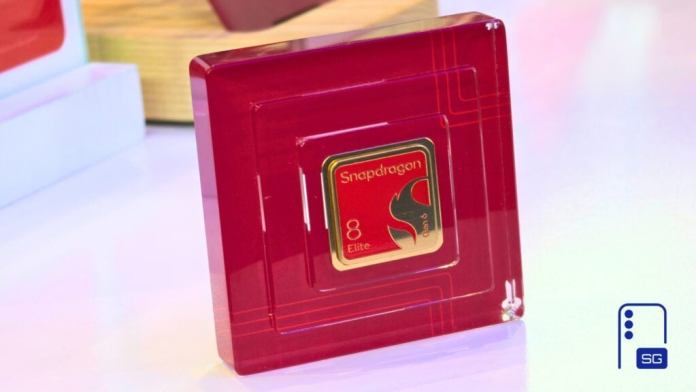
Taking directly to X (formerly Twitter), Qualcomm Chief Marketing Officer Don McGuire delivered a blunt pushback against the mounting rumors. Responding to coverage discussing the reported heating problems, McGuire explicitly labeled the claims as “100% NOT accurate.”
Elaborating further on the situation, McGuire clarified that there are no systemic thermal issues with the Snapdragon 8 Elite Gen 6.
“There are no systemic thermal issues with the 8 elite gen 6. OEMs are consistently tuning their platforms as they launch their products,” McGuire noted on X. “Always trying to balance performance and power to optimize their value props around different use cases. We work together to deliver the best…”
According to Qualcomm, what third-party observers or early test leaks might perceive as abnormal heating is simply standard device engineering. In the late stages of device development, smartphone original equipment manufacturers (OEMs) routinely recalibrate clock speeds, power draw, and thermal throttling profiles to find the sweet spot between peak speed and battery longevity.
           +---------------------------------------------------+
           |    DON MCGUIRE'S STATEMENT AT A GLANCE (VIA X)    |
           +---------------------------------------------------+
           |  • Verdict: "100% NOT accurate"                   |
           |  • Systemic Issues: None                          |
           |  • Root Cause: Standard OEM power & heat tuning   |
           |  • Direct Reference: Snapdragon 8 Elite Gen 6     |
           +---------------------------------------------------+
The Catch: Standard Chip vs. Extreme Variant
While McGuire’s pushback was firm, tech analysts quickly noticed an intriguing detail in the wording.
The original South Korean report specifically pointed the finger at the higher-clocked, performance-boosted variant—the Snapdragon 8 Elite Extreme Gen 6—which features enhanced GPU speeds and higher peak power limits for ultra-demanding tasks.
However, in his public response, McGuire explicitly named the standard Snapdragon 8 Elite Gen 6 processor.
| Processor Variant | Explicitly Mentioned by Name in X Post? | Status / Context |
| Snapdragon 8 Elite Gen 6 | Yes | Confirmed by CMO to have no systemic thermal issues. |
| Snapdragon 8 Elite Extreme Gen 6 | No | Not named in McGuire’s post; addressed separately by company reps. |
While official Qualcomm press representatives have separately noted that claims surrounding the Extreme variant are inaccurate, the fact that the company’s chief marketing executive left out the “Extreme” moniker in his social media rebuttal leaves room for speculation.
Higher clock rates almost always generate significantly more heat. Is it possible that the standard chip is smooth sailing while the top-tier “Extreme” binning requires additional cooling optimization?
What This Means for the Galaxy S27 Ultra
Because of this distinction, the question of what will power the upcoming Galaxy S27 Ultra remains wide open.
As detailed in earlier reporting on the Samsung Galaxy S27 Ultra Exynos 2700 switch rumors, Samsung has historically toggled between dual-sourcing processors or relying exclusively on Qualcomm for its Ultra lineup depending on yield, heat, and raw performance benchmarks. If thermal optimization on the Snapdragon side proves too tricky to solve before mass production deadlines, Samsung could theoretically lean more heavily on its own upcoming Exynos 2700 platform.
  +-----------------------------------------------------------------+
  |                  GALAXY S27 ULTRA CHIPSET OPTIONS               |
  +-----------------------------------------------------------------+
  |  1. Snapdragon 8 Elite Extreme Gen 6                            |
  |     - Preferred for top-tier peak GPU performance.             |
  |     - Subject to ongoing thermal and power tuning.              |
  |                                                                 |
  |  2. Exynos 2700                                                 |
  |     - Samsung's in-house alternative.                           |
  |     - Positioned as a viable backup or regional split option.   |
  +-----------------------------------------------------------------+
For consumers, aggressive thermal management isn’t just about benchmark scores; it directly impacts daily device comfort, gaming frame stability, and long-term battery health.
Whether Qualcomm’s statement completely settles the debate or simply pauses it until independent hardware testing begins remains to be seen. For now, keep your eye on our site as we track the latest hardware leaks, thermal benchmarks, and official device announcements.