

The smartphone industry has officially crossed the threshold from standard smartphone software into full-fledged artificial intelligence operating systems. Operating systems are no longer judged solely by lock screen customizations or control center transitions. Today, the real battleground lies in how seamlessly an operating system processes context, automates daily tasks, and secures your digital life.
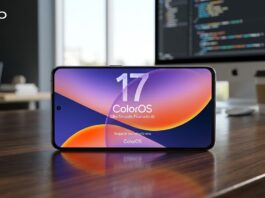
With the global release of OPPO’s Android 17-based operating system, detailed extensively in NPowerUser’s ColorOS 17 feature breakdowns, and Apple’s refined push with iOS 27, we are witnessing two distinct philosophies. OPPO is treating artificial intelligence as a modular set of dedicated agents that tackle active work, while Apple is embedding intelligence deeply across its entire hardware hardware-software ecosystem.
Here is an in-depth breakdown of how ColorOS 17 and iOS 27 compare, where each excels, and which approach represents the future of mobile computing.
1. On-Device AI Assistance: OPPO’s AI Mind Pilot vs. Apple’s Siri 2.0
OPPO and Apple have approached everyday digital assistance from two entirely different angles. OPPO’s headline feature in ColorOS 17 is AI Mind Pilot. Operating in two distinct modes—ASK Mode for instant conversational responses and Agent Mode for autonomous workflow execution—Mind Pilot acts as an active assistant. Instead of just answering questions, Agent Mode can scan your local files, compile travel portfolios, generate presentations, and organize multi-step work entirely in the background. Importantly, OPPO handles these agent workflows using local, on-device models to prevent sensitive personal data from leaving the handset.
Apple’s iOS 27, by contrast, focuses heavily on making Siri the ultimate contextual engine across the system. Siri in iOS 27 features complete Onscreen Awareness and deep App Actions. You can look at a document, web page, or email and ask Siri to “summarize this,” “edit the tone to sound more professional,” or “send these exact photos to a contact” without detailing the context.
Key Takeaway: ColorOS 17 delivers a more proactive agent experience that carries out complex workflows independently, while iOS 27 provides superior conversational context and seamless app-level execution within existing screens.
2. Personal Context & Daily Summaries: Mind Space vs. Systemwide Context
Remembering personal information and surfacing it at the right moment is a central focus for both operating systems.
                     AI ASSISTANT COMPARISON
  ┌─────────────────────────────────────────────────────────────┐
  │ ColorOS 17                                                  │
  │  ├── AI Mind Space   ---> Dedicated Personal Memory Hub     │
  │  ├── AI Mind Suggest ---> Cross-App Aggregated Daily Summary│
  │  └── OSEE Camera     ---> Visual Translation & Analysis     │
  ├─────────────────────────────────────────────────────────────┤
  │ Apple iOS 27                                                │
  │  ├── Siri Memory     ---> Systemwide Spotlight Context      │
  │  ├── Siri Cards      ---> Rich Native Interface Cards       │
  │  └── Visual Intel    ---> Ecosystem-Wide Camera AI          │
  └─────────────────────────────────────────────────────────────┘
ColorOS 17 introduces AI Mind Space, a dedicated information hub acting as a smart vault for your mobile activity. It remembers saved links, images, trip details, and past notes. You can query your memory directly using natural language. Coupled with AI Mind Suggest, ColorOS 17 aggregates data from calendar invites, incoming emails, flight details, and local weather forecasts to curate dynamic daily summaries.
Apple relies on a unified Spotlight Indexing System tied directly to Siri. iOS 27 does not separate memory into a distinct app interface; instead, Siri continuously indexes content from Messages, Mail, Notes, and Calendar. When you prompt Siri on iOS 27, it retrieves contextual cards pulled directly from native applications.
3. Camera Intelligence & Content Creation: OSEE vs. Visual Intelligence
Camera AI has expanded far beyond simple scene recognition or night mode processing.
OPPO’s OSEE (On-device Spatial Environmental Engine) converts the smartphone camera into an interactive visual agent. Pointing the camera at physical real-world objects, complex math formulas, dynamic charts, or foreign street signage allows OSEE to immediately translate text, extract structured data, or break down formulas on screen. Complementing this is AI Photo Agent, which brings advanced tools like Style Match. Users can upload a reference image, and ColorOS 17 will adjust color grade, tone, and lighting parameters of a destination photo to match the reference style naturally.
Apple’s Visual Intelligence on iOS 27 integrates camera search directly with systemwide dictation and Siri. Long-pressing an image inside Safari or triggering the camera control allows Siri to recognize items, surface business listings, translate menus instantly, or launch third-party app actions directly.
4. Mobile Security: AI Call Guard vs. Privacy Sandbox
As AI capabilities grow, so do privacy risks. Both manufacturers have elevated AI security in their software updates.
ColorOS 17 Security: OPPO addresses emerging AI scam threats head-on with AI Call Guard. The software includes real-time Synthetic Voice Recognition to alert users if a caller is using cloned audio, AI Face Swap Detection during video calls, and Cross-App Scam Protection to monitor suspicious background permissions. As noted in NPowerUser’s coverage of ColorOS 17 rollout timelines, these security features run alongside the new Laminar Flow Engine to keep performance snappy across OPPO, OnePlus, and realme devices.
iOS 27 Security: Apple continues to champion hardware-isolated privacy. iOS 27 runs the vast majority of writing tools, Siri context queries, and visual requests using local Private Cloud Compute when additional server power is needed.
Feature Comparison Matrix
| Capability / Feature | OPPO ColorOS 17 | Apple iOS 27 |
| Primary AI Driver | AI Mind Pilot (Ask & Agent Modes) | Upgraded Siri AI & Apple Intelligence |
| Personal Data Vault | AI Mind Space (Memory Hub) | Spotlight & Systemwide Context |
| Daily Summaries | AI Mind Suggest | Dynamic Siri Suggestion Cards |
| Visual AI Tools | OSEE Camera + AI Photo Agent (Style Match) | Visual Intelligence & Onscreen Siri |
| Scam Protection | Voice Clone & Face-Swap Real-Time Detection | On-Device Privacy & Private Cloud Compute |
| System Architecture | Android 17 base with Laminar Flow Engine | iOS 27 with Multi-Device Siri Sync |
The Verdict: Which Approach Wins?
The decision between ColorOS 17 and iOS 27 ultimately comes down to how you prefer to interact with artificial intelligence on your phone.
If you want an operating system that acts as an active assistant—capable of organizing scattered files, managing proactive memories, and protecting you against synthetic voice scams—OPPO’s ColorOS 17 offers one of the most complete modular AI suites on Android today.
If you prefer an AI experience that feels lightweight, deeply integrated, and consistent across tablets, laptops, and smartwatches, iOS 27 refines Siri into an essential companion that quietly powers daily multitasking.
Optimized for search readability and technical accuracy. For full device rollout lists and beta guides, review NPowerUser’s ColorOS 17 coverage.